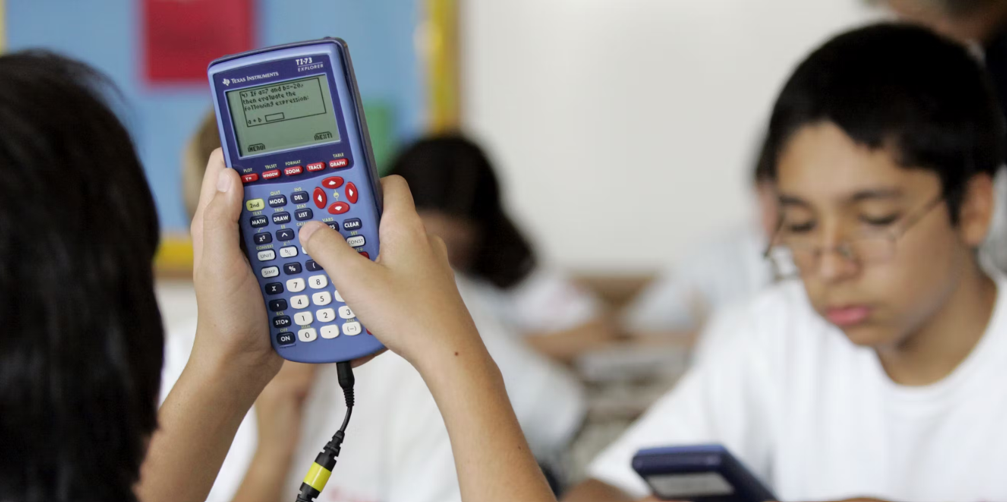
Graphing Calculators: A Timeless Tool for Mathematical Exploration
Since their debut in the 1980s, graphing calculators have revolutionized math education. Far more than number crunchers, these devices empower students to visualize functions, test hypotheses, and explore mathematical relationships in ways that deepen understanding.
While some educators have shifted toward free apps like Desmos and GeoGebra, the graphing calculator remains a powerful ally—especially when paired with thoughtful instruction. It supports both instrumental understanding (knowing how) and relational understanding (knowing why), helping students move beyond rote procedures to grasp the underlying concepts.
In Advanced Placement (AP) calculus, for example, graphing calculators have transformed how students learn limits, derivatives, and integrals. By zooming in and out on graphs, students can compare local and global behaviors of functions, fostering insight into infinite limits and continuity.
Moreover, graphing calculators encourage student-led inquiry. Whether adjusting coefficients to see how graphs change or modeling real-world scenarios, students gain confidence and curiosity through hands-on exploration.
Despite the rise of digital alternatives, the graphing calculator’s simplicity, reliability, and classroom integration make it a lasting asset. When used intentionally, it’s not just a tool—it’s a gateway to deeper mathematical thinking.



Leave your comment