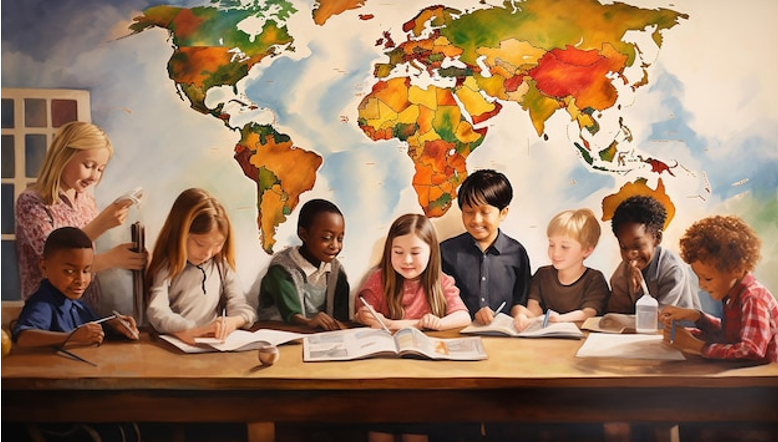
Education takes many forms across the globe. From hands-on farming lessons in California to morning coffee rituals in Prague, each country brings its own flavor to how children learn and grow. Here are some fascinating snapshots of school life in different corners of the world.
Learning by Doing in the USA
In a California classroom, theory meets practice in the most delicious way. German mom Mathilda shares how her child’s school explored farming through the lens of a cheeseburger:
“We went to the field to see how wheat grows for bread. Then we milked a cow and made cheese. We saw how lettuce and tomatoes grow. That’s how children understand how a cheeseburger ends up on their plate—and how much work goes into it.
In the U.S., parental involvement is highly encouraged. Mathilda even volunteered to teach art and drawing to her son Theodor’s classmates for two years, enriching their creative experience.
Coffee & Connection in the Czech Republic
Once a month, Czech schools host a cozy tradition: parents bring morning treats and spend time in class with their children and teachers. It’s like a parent-teacher meeting, but the spotlight is on the kids. They proudly show their notebooks, share what they’ve learned, and talk about their grades—all in a warm, celebratory atmosphere.
Freedom to Flourish in Finland
Finnish schools embrace student autonomy in remarkable ways. Children can wear what they like to class, write and draw in their textbooks, and choose subjects in high school. Grades aren’t given until sixth grade, and homework isn’t checked at all!
To top it off, Finnish students enjoy generous breaks: no school on Saturdays and five vacations throughout the academic year. The focus is on well-being, creativity, and self-directed learning.
Community and Care in France
In France, school feels like a second home. The principal greets every child by name at the entrance, fostering a sense of belonging. Children start visiting each other’s homes at a young age, even staying overnight.
Parents support one another too. If someone’s running late from work and can’t pick up their child, another family steps in and welcomes the child into their home. It’s a culture of trust and mutual care.
Discipline and Dedication in Japan
Japan’s school calendar is rigorous. The academic year begins in mid-April, and holidays are brief: summer lasts just over a month, winter two weeks, spring 10 days, and autumn no more than three.
Homework is intense—except during spring break. Students tackle written assignments, research projects, essays, crafts, and even learn tunes on a traditional recorder. The emphasis is on diligence, precision, and perseverance.
Final Thoughts
These glimpses into global classrooms remind us that learning isn’t one-size-fits-all. Each country brings its own values, rhythms, and traditions to education. Whether it’s through play, practice, or parental partnership, children everywhere are discovering the world in their own beautiful way.
At itutorvillage.com, we celebrate these diverse approaches and believe that every child deserves a learning journey that reflects their culture, curiosity, and potential.


Leave your comment